PERU
1 Courses
Golf in Peru: Pacific Cliffs, Andean Altitude, and a Sporting Tradition Shaped by Coastal Elites
Golf in Peru occupies a distinctive position in South America, shaped by early twentieth-century elite culture, dramatic geography, and a contemporary rebalancing toward broader participation and tourism.
The sport arrived in Peru in the first decades of the twentieth century, introduced primarily by British and North American expatriates involved in trade, mining, and railway development along the coast.
Lima, as the political and economic center, became the cradle of Peruvian golf, with the establishment of Lima Golf Club in the 1920s marking the first permanent and organized course.
For much of the twentieth century, golf remained associated with social clubs and upper-middle-class communities, particularly in urban coastal areas, and its growth was gradual rather than expansive.
The late twentieth century brought diversification as economic liberalization and increased international exposure encouraged the development of new facilities beyond traditional enclaves.
Post-2020, Peruvian golf has increasingly focused on modernization, youth development, and positioning the country as a niche destination offering year-round play across radically different environments, from sea level to high altitude.
Regional variation is central to Peru’s golf identity.
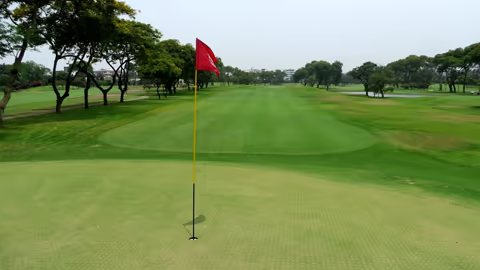
The Lima metropolitan area remains dominant, featuring coastal and urban courses influenced by the Pacific Ocean’s cool currents, frequent winds, and arid climate, resulting in firm fairways and limited rainfall that shape strategic ground-based play.
Southern coastal Peru, including areas near Paracas and Ica, presents emerging potential, with desert landscapes and open horizons offering conditions similar to links-style golf adapted to sand and wind rather than grass density.
The Andean highlands, though less developed for golf, introduce altitude as a defining factor, where thinner air significantly alters ball flight and distances, creating a unique playing experience for domestic and visiting golfers.
Northern Peru, closer to tropical influences, remains marginal in golf terms but increasingly discussed as part of long-term resort and mixed-use development strategies.
Several signature courses anchor Peru’s golfing reputation.
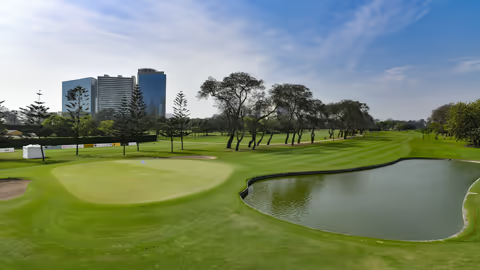
Lima Golf Club, originally laid out by English architects and later refined, remains the country’s most prestigious venue, combining traditional parkland elements with coastal winds and hosting major national championships and international amateur events well into the 2020s.
Los Inkas Golf Club, redesigned by Jack Nicklaus, illustrates modern championship design in an urban setting, using elevation changes, strategic bunkering, and water hazards to challenge elite players while serving as a frequent tournament venue.
Asia Golf Club, also associated with Nicklaus Design, reflects the growth of golf linked to residential developments south of Lima, offering a more contemporary aesthetic and serving as a hub for corporate and amateur competitions.
Highland courses such as those near Cusco, though smaller in scale, demonstrate how golf adapts to altitude, with shorter yardages on scorecards translating into longer effective distances due to terrain and climate, and catering primarily to local members and adventurous visitors.
Player development in Peru has progressed unevenly but shows clearer structure after 2020 through the efforts of the Peruvian Golf Federation, which has expanded junior programs, coaching education, and international competition exposure.
Peru has produced notable professionals, most prominently Graciela Dennys and other players who have competed on the LPGA and Symetra Tour, bringing international visibility to Peruvian golf and inspiring increased female participation.
Male professionals have found pathways through Latin American circuits and regional tours, benefiting from improved access to competitive events.
Golf tourism in Peru remains niche but distinctive, appealing to travelers seeking cultural depth alongside sport.
Peak golfing seasons vary by region, with the coastal zone offering nearly year-round play due to minimal rainfall, while highland courses are more seasonal.
Packages often combine golf with iconic non-golf attractions such as Machu Picchu, colonial Cusco, Lima’s culinary scene, and coastal nature reserves, creating itineraries that appeal to culturally motivated travelers rather than purely golf-focused tourists.
Sustainability has become increasingly relevant since 2020, particularly given Peru’s water scarcity challenges along the coast.
Courses in arid regions emphasize efficient irrigation, reclaimed water use, drought-tolerant grasses, and energy-saving maintenance practices, while inland facilities focus on soil conservation and landscape integration.
Environmental stewardship also includes bird habitat protection along coastal wetlands and responsible land management near archaeological zones.
Looking ahead, Peru’s golf sector is expected to grow cautiously, with future projects emphasizing quality upgrades, selective new developments near tourism corridors, and ambitions to host more regional amateur and professional tournaments, positioning golf as a complementary component of Peru’s diverse tourism economy rather than a mass-market product..