ARGENTINA
1 Courses
Golf in Argentina: Where Pampas Landscapes, British Heritage, and Modern Latin Spirit Converge
Golf in Argentina blends more than a century of British influence with the country’s expansive pampas geography, a combination that shaped a distinctive sporting identity rooted in social clubs and naturalistic course design.
The sport’s origins trace back to the late nineteenth century when British railway engineers and expatriates founded the first informal playing fields near Buenos Aires, eventually leading to the establishment of the Buenos Aires Golf Club in 1892 and the development of structured competitions by the early 1900s.
Over the decades, Argentina’s golf culture evolved from elite urban circles to a nationwide pastime, with significant growth between the 1960s and 1990s as new provincial clubs emerged and domestic tournaments gained regional importance.
Today the country hosts more than 300 courses, many shaped by notable local architects who embraced rugged terrain, wind-swept plains, and mature tree corridors to craft layouts that reward strategy over power.
Several regions illustrate this diversity, beginning with Greater Buenos Aires, where parkland courses lie within historic social clubs characterized by old-growth eucalyptus and refined playing traditions such as white-collar dress codes and a strong emphasis on etiquette inherited from early British members.
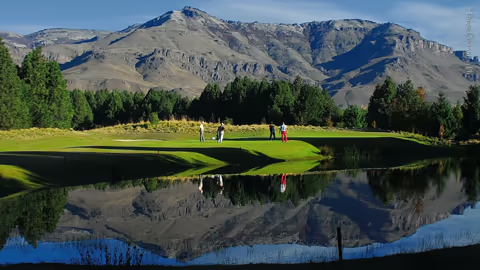
Patagonia forms a contrasting environment, using glacial lakes, volcanic foothills, and cool-season grasses to create mountain courses that are playable in summer but require careful maintenance due to variable winter conditions.
In the Cuyo region, particularly around Mendoza, courses integrate vineyards, desert edges, and Andean views, merging wine tourism with mild-climate golf.
A fourth hub exists on the Atlantic Coast around Mar del Plata, where seaside winds shape firm, fast surfaces reminiscent of British links, although true dune-based layouts remain limited.
Several signature courses illustrate Argentina’s architectural breadth, including Olivos Golf Club, shaped originally by Luther Koontz and later expanded by local designers to feature tree-lined corridors, demanding green complexes, and a tournament pedigree that includes multiple national opens.
Chapelco Golf & Resort in Patagonia, co-designed by Jack Nicklaus and Jack Nicklaus II, exploits rolling mountain landforms and natural valleys to create a modern resort-style routing praised for its risk-reward holes and consistent conditioning during the December–March high season.
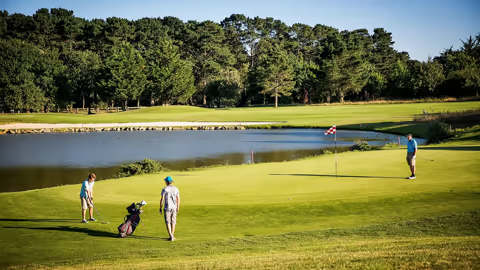
The Buenos Aires Golf Club, a 27-hole facility crafted by American architect Robert von Hagge, reflects a more sculpted aesthetic with bold bunkering, lakes used for strategic shaping, and international exposure as a venue for the 2000 World Golf Championships.
Argentina also nurtures strong player development structures, many linked to club-based junior academies that integrate multi-sport training—common in a country passionate about football and tennis—to enhance coordination and athleticism.
Since 2020, several academies have adopted data-driven coaching tools such as launch monitors and biomechanics analysis, helping maintain the nation’s record of producing elite professionals.
Ángel Cabrera’s earlier major victories remain influential, while younger talents such as Emiliano Grillo continue to represent the country on the PGA Tour, motivating regional federations to sponsor youth circuits with updated performance pathways.
Golf tourism benefits from Argentina’s seasonal reversal relative to North America and Europe, drawing visitors seeking summer golf between November and March.
Packages often combine rounds in Buenos Aires with wine-region stays in Mendoza or lake-district excursions in Bariloche, and many clubs maintain reciprocal arrangements with hotels to simplify access for international guests.
Beyond golf, travelers can experience tango districts, national parks, wildlife reserves, and culinary culture built around asado traditions.
Sustainability initiatives have grown since 2020, with many clubs adopting precision irrigation to reduce water waste, shifting toward drought-tolerant grasses, and implementing wildlife corridors that protect native bird species across suburban and rural landscapes.
Some courses have sought GEO or regional environmental certifications, especially in Patagonia where ecological sensitivity regulations are strict.
Future development includes resort expansions in Mendoza integrating agritourism, ongoing modernization of provincial club facilities, and exploratory discussions—publicly acknowledged since 2022—about hosting expanded South American tour events to strengthen Argentina’s role in continental competition.
Although long-term forecasts vary, domestic federations anticipate steady participation growth driven by tourism, upgraded training centers, and improved accessibility for younger players..